
Muscle Mass Calculator
Clinically Accurate Skeletal Muscle Analysis (Lee Equation)
Key Takeaways
- Muscle mass makes up 30–44% of your total body weight, depending on age and gender.
- Men typically carry 33–44% skeletal muscle mass. Women carry 24–35%.
- You lose 3–8% of muscle per decade after age 30 without resistance training.
- This calculator estimates muscle mass within 3–5% of DEXA scan results.
- Eating 1.6–2.2 g of protein per kg body weight supports muscle growth.
- Track your results every 4–6 weeks under the same conditions for the best accuracy.
Use our free muscle mass calculator to estimate your total skeletal muscle mass in kilograms and pounds. Enter your gender, age, height, weight, and a few circumference measurements. You get results in seconds.
The tool shows your total muscle mass, muscle mass percentage, fat-free mass, lean body mass, and a clear category badge. That badge tells you whether you fall into the Low, Normal, Athletic, or Excellent range for your age and gender.
No lab visit. No expensive equipment. Just a tape measure, a scale, and two minutes of your time.
Your Muscle Mass Results
After you hit Calculate, you see a results card. Here is what every number on that card means.
Total Muscle Mass (kg and lbs): This is the estimated weight of your skeletal muscles. Not your organs. Not your bones. Not water. Just the muscles you can train and grow.
Muscle Mass Percentage: This tells you what share of your total body weight comes from skeletal muscle. It is the most useful number on the entire page. A higher percentage means a stronger, healthier body composition.
Fat Free Mass: Everything in your body minus all fat tissue. This includes muscles, bones, organs, and water.
Lean Body Mass: Similar to fat-free mass, but keeps essential fat in the count. It is always slightly higher than fat-free mass.
Category Badge: A color-coded label that puts your result in context.
| Category | Men (%) | Women (%) | What It Means |
|---|---|---|---|
| Low | Below 33% | Below 24% | Healthy for the general population |
| Normal | 33–39% | 24–30% | Healthy for general population |
| Athletic | 39–44% | 30–35% | Above average fitness |
| Excellent | Above 44% | Above 35% | Elite level |
If your result sits in the Low range, keep reading. Every section below explains exactly what to do about it. If you are in the Athletic or Excellent range, this guide will help you stay there as you age.
Tracking tip: Measure yourself at the same time of day, under the same conditions, every 4–6 weeks. Morning readings before breakfast give the most consistent results.
What Is Muscle Mass?
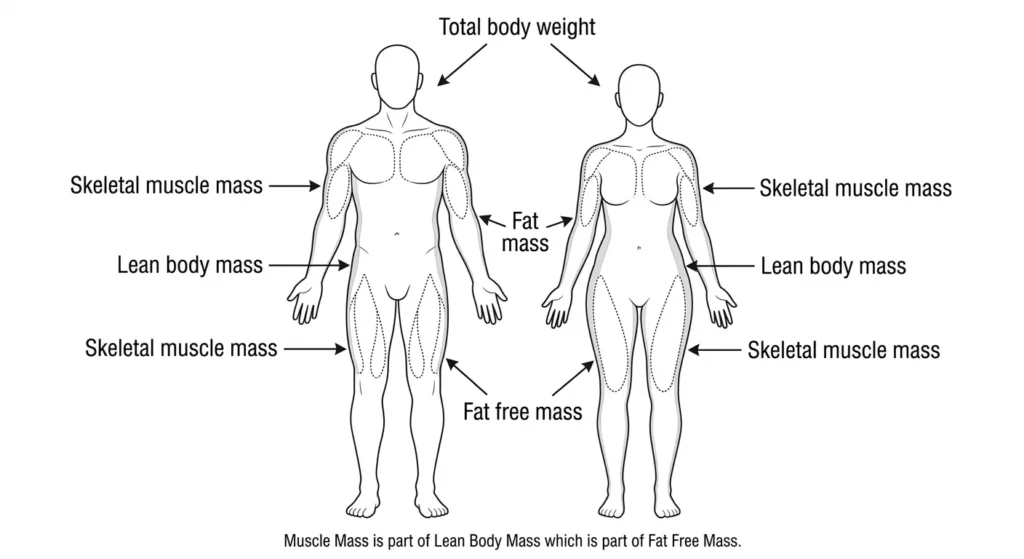
Muscle Mass Definition and Why It Matters
Muscle mass is the total weight of skeletal muscle tissue in your body. Nothing more. Nothing less.
Your body has three types of muscle. Skeletal muscle moves your bones. Smooth muscle lines your organs and blood vessels. Cardiac muscle pumps your heart. When fitness professionals and body composition tools talk about muscle mass, they mean skeletal muscle only. That is the tissue you see in the mirror, train at the gym, and grow with protein and progressive overload.
Skeletal muscle mass typically accounts for 30–40% of total body weight in men and 25–35% in women. That makes it one of the largest tissue types in your entire body.
But muscle is not just about looks or strength. It is metabolically active tissue. It burns calories around the clock. It stores glucose. It supports your joints. It protects your bones. And the amount of body muscle you carry directly influences how your metabolism works, how well you age, and how resilient your body is against disease.
Here is the part most people get wrong. Muscle mass is not the same as lean body mass or fat-free mass. People swap these terms constantly, even in fitness communities. Your lean body mass includes muscles, bones, organs, water, and connective tissue. Muscle mass counts skeletal muscle tissue alone.
When this calculator gives you a number, it is estimating how much skeletal muscle you carry. That specific number is what you need for tracking fitness progress, spotting early signs of age-related muscle loss, and understanding your real body composition beyond what a bathroom scale tells you.
Muscle Mass vs Lean Body Mass vs Fat Free Mass
Three terms. Three different meanings. Mixing them up leads to confusion. Let us sort this out permanently.
Muscle mass refers to your skeletal muscles. The ones attached to your bones. The ones you train with squats, deadlifts, and bench presses.
Lean body mass (LBM) is a much bigger bucket. It includes your muscles, bones, organs, blood, water, tendons, ligaments, basically everything in your body except stored body fat. It does keep a small amount of essential fat in the body because your brain, nerves, and organs need it to function. Doctors often use LBM for medication dosing because it reflects the metabolically active portion of your body.
Fat-free mass (FFM) is almost identical to lean body mass, with one key difference. It removes all fat, including essential fat. Your body needs roughly 2–3% essential fat in men and 5–12% in women just to survive. Lean body mass keeps that number. Fat-free mass strips it away completely.
The practical gap between LBM and FFM is small — around 2–3% of body weight in men and 5–12% in women. But for precise body composition analysis or research-level calculations like the FFMI Calculator, the distinction matters.
| Metric | What It Includes | Best Used For |
|---|---|---|
| Muscle Mass | Skeletal muscles only | Fitness tracking, spotting muscle loss |
| Lean Body Mass | Muscles + bones + organs + water + essential fat | Medical dosing, general health assessment |
| Fat Free Mass | Everything minus ALL fat (zero fat) | Research, FFMI calculation |
Which number should you focus on?
For fitness purposes, tracking gains, monitoring age-related decline, adjusting your training program, and measuring muscle mass and muscle mass percentage are the most actionable. They tell you exactly how much trainable tissue you carry. Changes in these numbers reflect whether your workout and nutrition plan are actually working.
For a broader health picture, lean body mass gives you the full non-fat view. And for advanced body composition benchmarking, fat-free mass feeds into tools like the FFMI Calculator.
All three numbers matter in different contexts. But for most people using this tool, skeletal muscle mass is the one that drives real decisions.
How Much of Your Body Weight Is Muscle?
That depends on who you are. Your age, gender, training history, and genetics all play a role. But we have solid population-level benchmarks.
Men aged 18–25 typically carry 40–44% of their total body weight as muscle. A 180-pound man in this range has roughly 72–79 pounds of skeletal muscle tissue. That percentage holds relatively steady through the late 20s and early 30s as long as you stay physically active.
Women aged 18–25 sit at about 31–33%. A 140-pound woman at this age carries roughly 43–46 pounds of skeletal muscle. Lower testosterone levels account for most of this difference between men and women.
Athletes push these numbers higher. A competitive soccer player or CrossFit athlete might hit 45–48%. A trained distance runner may sit slightly lower in total muscle mass but higher in muscle efficiency. And professional bodybuilders? Some reach 50% or more, though that level almost always involves pharmaceutical help and is far from a realistic or healthy target.
On the flip side, inactive adults lose muscle steadily once they pass 30. By age 60, a person who has never lifted weights or followed a resistance training program may have a muscle ratio below 30%. At that point, daily tasks get harder. Balance gets worse. Metabolism slows down. Fall risk goes up.
The encouraging part? Your muscle mass percentage is not permanently fixed. Resistance training builds it. Inactivity destroys it. Age tries to push it down, but a solid training program pushes back. Hard. Even in people well past their 60s.
Knowing where you stand right now, which is exactly what this calculator tells you, is the first step toward either building more or protecting what you already have.
How the Muscle Mass Calculator Works
Formulas Used to Estimate Muscle Mass
The gold standard for measuring skeletal muscle mass is a DEXA scan. It is accurate, detailed, and used across fitness and body composition research. It also costs $75–$300 and requires a trip to a specialized clinic or lab.
That is not practical for someone who just wants to check their progress after a training block.
Predictive formulas solve this problem. Researchers built mathematical equations that estimate muscle mass from simple body measurements. You plug in your height, weight, age, gender, and circumferences. The formula does the rest.
The most widely validated formula is the Lee equation. Developed using DEXA-derived data from hundreds of men and women across different ages and body types, it has been tested and confirmed across multiple populations. It is the formula most commonly used in online body composition tools, and it is what powers this calculator.
The Lee Formula:
For Men:
Muscle Mass (kg) = 0.244 × Body Weight (kg) + 7.80 × Height (m)
                   + 6.6 × Sex (1) − 0.098 × Age − 3.3

For Women:
Muscle Mass (kg) = 0.244 × Body Weight (kg) + 7.80 × Height (m)
                   + 6.6 × Sex (0) − 0.098 × Age − 3.3
Another classic approach is the Matiegka formula, one of the earliest anthropometric methods for estimating muscle mass. It relies on skinfold thickness and circumference measurements taken at multiple body sites. While historically important in sports science, it requires more complex measurements and trained technicians. The Lee equation has largely replaced it for general-purpose estimation because it needs fewer inputs and correlates well with DEXA results.
In clinical settings, you may also encounter appendicular skeletal muscle mass (ASMM). This measures only the muscles in your arms and legs. Dividing ASMM by height squared gives you the Skeletal Muscle Index (SMI), which professionals use to screen for sarcopenia.
This calculator estimates total skeletal muscle mass using the regression equation approach. The results are estimates — not clinical measurements. They are best used for tracking trends over time rather than making medical decisions. If you need clinical precision, a DEXA scan or InBody BIA test is the way to go.
What Measurements Do You Need?
You need six inputs. Each takes less than a minute to collect. Here is what they are and exactly how to get them right.
Body weight: Step on a scale first thing in the morning, after using the bathroom, wearing minimal clothing. Record in kilograms or pounds. The exact number matters less than consistency. Weigh yourself the same way every time.
Height: Stand barefoot against a flat wall. Look straight ahead. Have someone mark the highest point of your skull and measure down. Record in centimeters or inches. Once you have an accurate number, you can reuse it.
Age: Your current age in years. The formula uses this to account for natural age-related muscle decline.
Gender: Select male or female. The formula adjusts for hormonal differences between sexes. Men carry more baseline skeletal muscle because of higher testosterone.
Waist circumference: Wrap a soft measuring tape around your natural waist, right above the belly button. Stand relaxed. Do not suck in your stomach. Keep the tape snug but not compressing your skin. Record in centimeters or inches.
Hip circumference: Measure around the widest part of your hips and buttocks. Stand with feet together. Keep the tape level all the way around.
Neck circumference: Wrap the tape just below your Adam's apple. Keep it level. Do not tilt your head up or down.
Tips for getting consistent, repeatable measurements:
- Always measure at the same time of day. Morning is best.
- Use the same tape measure every time. Different tapes can vary.
- Measure on bare skin, not over clothing.
- Take each measurement twice and use the average.
- Do not measure right after a workout. Your muscles swell temporarily from blood flow, and circumference measurements will read higher than normal.
- Avoid measuring after a large meal or drinking a lot of water.
Small measurement errors add up. A single centimeter off on your waist reading shifts the final result. Be precise, be consistent, and focus on changes over weeks and months rather than stressing over any single session.
How Accurate Is This Calculator?
Let us be straight about what a formula-based tool can and cannot deliver.
What it can do: Give you a reliable estimate of your skeletal muscle mass that tracks changes over time. If you measure the same way every session, increases or decreases in your calculated muscle mass reflect real changes in your body.
What it cannot do: Replace a clinical body composition scan for diagnosing medical conditions.
When tested against DEXA scans, the Lee equation lands within 3–5% of the DEXA-measured value across most populations. That is a strong performance for a free tool that requires nothing but a tape measure and a bathroom scale.
However, accuracy shifts depending on individual factors:
| Factor | How It Affects Results |
|---|---|
| Very high body fat | May slightly overestimate muscle mass |
| Very lean and muscular build | May slightly underestimate muscle mass |
| Hydration status | Dehydration shrinks circumference readings |
| Measurement technique | Inconsistent measuring is the biggest error source |
| Extreme age (over 80) | Formulas become less reliable at the extremes |
How this calculator compares to other body composition methods:
| Method | Accuracy vs DEXA | Cost | Where to Get It |
|---|---|---|---|
| This Calculator (Lee Formula) | ±3–5% | Free | Right here, right now |
| Consumer BIA Scale | ±5–8% | $30–$200 one-time | Home |
| Clinical InBody BIA | ±2–3% | $25–$75 per session | Gyms, clinics |
| Skinfold Calipers | ±3–6% | $10–$30 one-time | Home or gym |
| Bod Pod | ±2–3% | $50–$75 per session | Sports labs |
| Hydrostatic Weighing | ±1–2% | $50–$150 per session | Universities, labs |
| DEXA Scan | Gold standard | $75–$300 per session | Clinics, hospitals |
When should you consider a clinical test?
If you want a baseline measurement with maximum precision — especially if you plan to make big changes to your training or nutrition, getting a single DEXA scan is worth the investment. Then use this calculator every 4–6 weeks to track changes between scans.
For everyone tracking general fitness progress, checking body composition trends, or simply wanting to know their muscle mass percentage without spending money, this calculator gives you exactly what you need.
Average Muscle Mass by Age and Gender
Your muscle mass number means nothing without context. Is 30 kg good? Is 35 kg excellent? That depends entirely on your age and gender. The tables below give you that context.
Average Muscle Mass for Men by Age
Men hit peak skeletal muscle mass between their mid-20s and early 30s. This is when testosterone is highest, recovery is fastest, and the body responds most aggressively to training. After 30, things start sliding, slowly at first, then faster.
Without resistance training, most men lose 3–5% of their muscle per decade through their 30s, 40s, and 50s. After 60, the decline accelerates to roughly 1–2% per year. That is when sarcopenia — the clinical term for significant age-related muscle loss- becomes a serious risk.
But this decline is not a death sentence. Men who lift weights consistently maintain significantly more muscle mass well into their 60s, 70s, and beyond compared to inactive men of the same age.
| Age Group | Average Muscle Mass (kg) | Muscle Mass (%) | What Is Happening |
|---|---|---|---|
| 18–25 | 33–36 kg | 40–44% | Peak building years — testosterone is at its highest |
| 26–35 | 32–35 kg | 38–42% | Maintenance phase — muscle holds steady with activity |
| 36–45 | 30–33 kg | 36–40% | Slight decline begins — training becomes more important |
| 46–55 | 28–31 kg | 34–38% | Moderate decline — hormone levels dropping |
| 56–65 | 26–29 kg | 32–36% | Sarcopenia risk rises — strength training is critical |
| 65+ | 23–27 kg | 28–34% | High sarcopenia risk — every session counts |
If your result falls below the average for your age group, that is not a reason to panic. It is a reason to start. A man in his 50s with 27 kg of muscle who begins a structured resistance training program and increases protein intake can realistically add 2–4 kg of muscle within a year. That alone can shift him from the risk zone into the healthy range.
Use this table as a benchmark, not a judgment. What matters most is whether your number is moving in the right direction over the next 3, 6, and 12 months.
Average Muscle Mass for Women by Age
Women naturally carry less total skeletal muscle mass than men. This is straightforward biology; lower testosterone means less raw muscle-building stimulus. But the muscle women do carry is equally functional, equally important for health, and equally responsive to training.
The biggest drop for women happens after menopause. Estrogen has a protective role in muscle maintenance. When estrogen levels fall during and after menopause, muscle loss accelerates noticeably. This makes the 40s, 50s, and beyond a critical window for women to prioritize resistance training.
| Age Group | Average Muscle Mass (kg) | Muscle Mass (%) | What Is Happening |
|---|---|---|---|
| 18–25 | 21–24 kg | 31–33% | Peak building years |
| 26–35 | 20–23 kg | 29–31% | Maintenance phase |
| 36–45 | 19–22 kg | 27–30% | Slight decline |
| 46–55 | 18–21 kg | 25–28% | Moderate decline — menopause impact |
| 56–65 | 16–19 kg | 23–26% | Sarcopenia risk rises |
| 65+ | 14–17 kg | 20–24% | High sarcopenia risk |
Three things every woman should know about muscle mass:
First, you will not "get bulky" from lifting weights. Women do not produce enough testosterone to develop extreme muscle mass without pharmaceutical help. What you will get is a tighter, stronger, more defined physique.
Second, muscle protects bone. Women face a much higher risk of osteoporosis than men. Stronger muscles pull harder on bones during movement, which stimulates bone mineral density. Lifting heavy things literally makes your skeleton stronger.
Third, it is never too late. Studies show that women in their 80s and 90s gained measurable muscle mass and strength from consistent resistance training. The body responds to training stimulus at every age. The sooner you start, the more you have to protect, but starting late still beats never starting.
Muscle Mass Ranges: What Is Healthy?
Your calculator result drops you into one of four categories. Here is what each one means, who typically falls there, and what to do about it.
| Category | Men (%) | Women (%) | Typical Profile |
|---|---|---|---|
| Low | Below 33% | Below 24% | Sedentary lifestyle, very little resistance training, older adults without exercise history |
| Normal | 33–39% | 24–30% | Moderately active adults, some physical activity, general population average |
| Athletic | 39–44% | 30–35% | Regular resistance training, a structured workout program, and recreational athletes |
| Excellent | Above 44% | Above 35% | Competitive athletes, dedicated lifters, years of consistent training |
Low category, what to watch for:
If your result lands here, pay attention to your daily experience. Low muscle mass often shows up as:
- Feeling wiped out after minimal physical activity
- Struggling to carry grocery bags, climb stairs, or get off the floor
- Gaining fat easily, even without eating more
- Poor balance and frequent stumbling
- Feeling cold often (less metabolically active tissue means less body heat)
- Visible thinning of arms and legs over time
One or two of these is normal from time to time. But if you are experiencing several of them alongside a Low result, it is worth taking action. The good news is that this category responds the most dramatically to intervention. Beginners in the Low range often see the fastest and most satisfying improvements because their muscles are primed to respond to new training stimulus.
Normal category, room to grow:
Most people land here. You are in a healthy range, but there is meaningful room for improvement. Adding even 2–3 kg of skeletal muscle shifts your metabolism, your appearance, and your physical capability more than you might expect.
Athletic and Excellent categories, maintain and protect:
If you are here, your training and nutrition are working. The focus shifts from building to maintaining, especially as you age. It takes far less effort to keep muscle than to rebuild it after losing it.
Why Muscle Mass Matters for Your Health
Muscle Mass and Your Metabolism
Here is a fact that changes how you think about your body: muscle burns calories even while you sit on the couch doing absolutely nothing.
Each kilogram of skeletal muscle burns roughly 13 calories per day at rest. That might seem small per kilogram, but when you add up 30 or 35 kg of muscle, it becomes the single largest engine driving your basal metabolic rate (BMR), the calories your body burns just to keep you alive.
Let us run the numbers.
A man carrying 35 kg of muscle burns roughly 455 calories per day from muscle tissue alone. If he loses 5 kg of muscle over a decade of inactivity, that is 65 fewer calories burned every single day. Over a year, that adds up to roughly 23,700 calories, enough to gain about 3.4 kg (7.5 lbs) of pure fat without changing a single thing about his diet.
This is exactly why so many people gain weight as they age, even when their eating habits stay the same. It is not some vague "slower metabolism." It is a smaller metabolic engine. Less muscle means less fuel burned at rest.
Your total daily energy expenditure (TDEE), the full picture of calories you burn in a day, depends heavily on how much skeletal muscle you carry. A 180-pound man with 38% muscle mass burns more calories at rest than a 180-pound man with 30% muscle mass. Same scale weight. Very different metabolic reality.
This is also why crash dieting without resistance training is so damaging. You lose weight, yes — but a significant chunk of it comes from muscle. Your resting metabolic rate drops. Your calorie needs shrink. And the moment you return to normal eating, the weight comes back, often as pure fat. That is the yo-yo cycle, and muscle loss sits at the center of it.
Building and maintaining muscle is not just about looking good. It is one of the most effective long-term strategies for managing body weight without living in a permanent calorie deficit.
Muscle Mass and Longevity
This section might change how you think about the gym entirely.
Multiple large-scale population studies consistently find the same pattern: people with more muscle mass live longer. Not just a little longer. Significantly longer. And the protective effect holds even after adjusting for body fat, age, and chronic conditions.
The relationship makes sense when you think about what the muscle actually does in your body:
Heart health. Skeletal muscle is a major metabolic organ. It processes glucose, clears fatty acids from the bloodstream, and reduces the metabolic burden on your cardiovascular system. Higher muscle mass is consistently linked to lower rates of cardiovascular disease.
Grip strength and survival. Grip strength is one of the simplest measures of overall muscle quality. In massive population studies involving tens of thousands of people, grip strength consistently emerges as one of the strongest predictors of all-cause mortality. Stronger grip = longer life. And grip strength is a direct reflection of overall muscle mass.
Fall prevention. Falls are the leading cause of injury-related death in adults over 65. Strong muscles improve balance, coordination, reaction time, and the ability to catch yourself before hitting the ground. Every kilogram of muscle in your legs and core directly reduces your fall risk.
Functional independence. Muscle mass determines how long you can live independently as you age. Getting out of a chair. Climbing stairs. Carrying groceries. Opening jars. Walking through the grocery store. These tasks require a minimum threshold of muscle strength. Drop that threshold below, and you start needing help with everyday life.
Here is the bottom line. Muscle is not a vanity metric. It is a survival organ. Every kilogram you build or protect today is an investment in years of active, independent, healthy living. That investment compounds over decades.
Muscle Mass and Disease Prevention
Your skeletal muscles do far more than move your body. They act as one of your body's largest glucose storage and processing systems.
After you eat carbohydrates, your body converts them to glucose. That glucose needs to go somewhere. Muscle tissue is the primary destination. Your skeletal muscles absorb a massive share of the glucose circulating in your blood after a meal.
The math is simple:
- More muscle = more storage capacity = glucose gets absorbed efficiently = blood sugar stays stable.
- Less muscle = less storage capacity = glucose lingers in the blood = insulin has to work harder = insulin resistance develops.
This direct connection between muscle mass and blood sugar control is why higher skeletal muscle mass is strongly linked to lower rates of type 2 diabetes and improved metabolic health overall.
Beyond diabetes, muscle mass protects you in several other ways:
Bone density. Your muscles pull on your bones every time you move. That mechanical stress signals your bones to maintain and even increase their mineral density. People with more muscle mass consistently have stronger bones, which means a lower risk of osteoporosis and fractures. This is especially important for women after menopause.
Metabolic syndrome. Higher muscle mass is associated with healthier blood pressure, better cholesterol levels, less visceral fat, and lower rates of metabolic syndrome — the dangerous combination of factors that dramatically increases heart disease and stroke risk.
Recovery from illness and surgery. People with higher muscle mass recover faster from surgery, tolerate treatments better, and spend less time in hospitals. Muscle acts as a protein reserve that your body draws from during times of stress and healing.
Your muscle tissue is a metabolic organ, a glucose vault, a bone-density protector, and a recovery engine. Every health marker you care about, blood sugar, blood pressure, bone strength, body fat, improves when you carry more of it.
Sarcopenia: The Hidden Danger of Muscle Loss
Sarcopenia is the gradual, progressive loss of skeletal muscle mass and strength that comes with aging. It is not just "getting weaker." It is a recognized condition with serious consequences for quality of life, independence, and even survival.
Here is the timeline:
- After age 30, adults start losing muscle at a rate of roughly 3–8% per decade if they do not actively train against it.
- After age 60, the rate accelerates. Inactive individuals can lose 1–2% of muscle mass per year.
- By age 80, a sedentary person may have lost 30–50% of their peak muscle mass.
- Sarcopenia affects an estimated 10–30% of adults over 60 worldwide.
What makes sarcopenia different from regular muscle loss?
Muscle atrophy is a temporary loss from disuse. Break your arm, wear a cast for six weeks, and the muscle shrinks. Start using it again, and it comes back. Atrophy is reversible once you remove the cause.
Sarcopenia is a chronic, age-driven process involving motor neuron changes, hormone decline, chronic low-grade inflammation, and reduced ability of muscle cells to regenerate. It builds slowly over years and decades. By the time most people notice it, significant muscle has already been lost.
Cachexia is a different beast entirely. It is severe muscle wasting driven by an underlying serious illness like cancer, heart failure, or COPD. Cachexia involves rapid, involuntary loss of both muscle and fat that resists normal nutritional intervention.
Warning signs of sarcopenia:
- Grip strength is declining noticeably
- Difficulty standing up from a seated position without using your arms
- Walking speed is slowing down
- Balance getting worse
- Fatigue during basic daily activities
- Visible loss of muscle size in arms and legs
- Unexplained weight loss in older age
How to fight sarcopenia at any age:
- Resistance training 2–4 times per week. This is the single most effective tool. It works at 30, and it works at 80.
- Protein intake of 1.2–1.6 g per kg body weight daily. As you age, your body becomes less efficient at using protein for muscle building. You need more to get the same result.
- Adequate vitamin D. Low vitamin D levels are extremely common in older adults and directly linked to reduced muscle function.
- Stay active overall. Walking, swimming, yoga, and gardening, general movement complements resistance training and supports joint health.
- Prioritize sleep. Growth hormone, essential for muscle repair, peaks during deep sleep. Aim for 7–9 hours.
- Monitor regularly. Use this muscle mass calculator every 4–6 weeks to catch declines early. A small dip over a few months is far easier to reverse than a large drop over several years.
Sarcopenia is not an inevitable part of aging. It is a condition that responds powerfully to intervention. But the window for prevention is much wider than the window for reversal. Do not wait until the symptoms show up. Start building your defense now.
How to Build and Increase Muscle Mass
Strength Training for Muscle Growth
Building skeletal muscle mass requires one non-negotiable ingredient: resistance training. You have to challenge your muscles with loads they are not yet adapted to. That is what triggers growth.
The biological process is straightforward. When you lift weights, you create microscopic stress in your muscle fibers. Your body repairs that stress and adds extra material to handle the same load more easily next time. Repeat this cycle thousands of times over months and years, and you get muscle hypertrophy, real, measurable growth in muscle size and mass.
Here are the training variables that matter most for building muscle:
Frequency. Train each major muscle group 2–3 times per week. A full-body program 3 days a week or an upper/lower split 4 days a week both work well.
Volume. Aim for 10–20 total working sets per muscle group per week. Beginners should start at the low end. More advanced lifters may need more volume to keep growing.
Rep range. 6–12 repetitions per set is the traditional hypertrophy range. But muscle growth happens across all rep ranges as long as the effort level is high. You can build muscle with sets of 5 and sets of 15.
Intensity. Use a weight that brings you within 1–3 reps of failure on most working sets. If you finish a set feeling like you could have done five more reps, the weight is too light.
Rest between sets. 60–120 seconds for hypertrophy-focused work. 2–5 minutes for heavy compound lifts where strength is the priority.
The best compound exercises for total body muscle mass:
| Exercise | Primary Muscle Groups | Sets × Reps |
|---|---|---|
| Squat | Quads, glutes, core | 4 × 6–10 |
| Deadlift | Back, hamstrings, glutes, core | 4 × 5–8 |
| Bench Press | Chest, shoulders, triceps | 4 × 6–10 |
| Pull-Up / Lat Pulldown | Back, biceps | 3 × 6–12 |
| Overhead Press | Shoulders, triceps | 3 × 8–12 |
| Barbell Row | Back, rear delts, biceps | 4 × 8–12 |
These compound movements recruit multiple large muscle groups at once. They produce the greatest stimulus for growth because they let you move heavy loads through large ranges of motion.
For beginners: Start with a simple full-body workout performed 3 days per week. Focus on learning correct form with moderate weights. Your muscles will grow rapidly because they have never been exposed to this type of stimulus before. This is the "newbie gains" phase, and it is the most rewarding stretch of your entire fitness journey.
For intermediate and advanced lifters, Split routines become necessary to manage higher training volumes. Push/pull/legs or upper/lower splits let you hit each muscle group hard while still recovering between sessions.
The biggest mistake beginners make? Doing too much too soon. Starting with a 6-day bodybuilding split, maxing out on every lift, and training through pain is a recipe for injury and burnout. Build gradually. Three sessions a week are plenty to start. You can add more as your body adapts.
How Much Muscle Can You Realistically Gain?
Social media is full of "8-week transformations" that are misleading at best and dishonest at worst. Real muscle growth is slower than Instagram suggests. Setting honest expectations protects you from frustration, wasted money on useless products, and dangerous shortcuts.
Here is what natural muscle gain actually looks like:
| Training Experience | Monthly Muscle Gain | Annual Muscle Gain |
|---|---|---|
| Beginner (first 12 months) | 1–1.5 kg (2–3 lbs) | 10–13 kg (22–28 lbs) |
| Intermediate (years 2–3) | 0.5–1 kg (1–2 lbs) | 5–6 kg (11–13 lbs) |
| Advanced (year 4+) | 0.25–0.5 kg (0.5–1 lb) | 2–3 kg (4–6 lbs) |
These numbers assume consistent training, adequate protein, sufficient sleep, and no performance-enhancing drugs.
There is a concept called the natural muscle limit, the maximum amount of skeletal muscle your genetics, frame, and hormones allow you to carry. Most men can add roughly 18–23 kg (40–50 lbs) of total skeletal muscle above their untrained baseline over a full training career. For women, the ceiling is roughly 9–14 kg (20–30 lbs).
Reaching 80–90% of your genetic potential takes about 4–5 years of serious, consistent training. After that, gains slow to a crawl, but they never fully stop. Even advanced lifters add small amounts of muscle year after year.
Factors that affect how fast you build muscle:
- Age: Younger adults build faster (higher testosterone, faster recovery)
- Gender: Men build roughly twice as fast as women on average
- Genetics: Muscle fiber type distribution, limb length, hormone sensitivity
- Training quality: Progressive overload with proper form beats random high-volume sessions
- Nutrition: Sufficient protein and a slight calorie surplus accelerate growth
- Sleep: Growth hormone peaks during deep sleep, and sleep debt directly impairs recovery
- Stress levels: Chronic stress raises cortisol, which works against muscle building
Bulking vs lean bulk:
Traditional bulking means eating a large surplus, 500–1,000 calories above maintenance. You gain muscle quickly, but also significant fat. Then you need a long cutting phase to get lean again.
A lean bulk uses a smaller surplus, 200–300 calories above maintenance. Muscle gain is slightly slower, but fat gain stays minimal. For most people who are not stepping on a bodybuilding stage, the lean bulk approach is superior. You stay leaner year-round, skip brutal cuts, and the total muscle gained over a full year is nearly identical.
Progressive Overload: The Key to Continuous Muscle Growth
If you take one principle from this entire article, make it this one.
Progressive overload means systematically increasing the demands you place on your muscles over time. Your body adapts to stress. If you do the same exercises with the same weight for the same reps week after week, your muscles have no reason to grow beyond what that fixed demand requires.
This is the single biggest reason most gym-goers look the same year after year. They train hard but never progress. They lift the same 60 kg bench press on Monday for months. Their body adapted to that load in week three. Everything after that is maintenance, not growth.
Five practical ways to apply progressive overload:
- Add weight. The most obvious. If you squatted 80 kg for 4 sets of 8 last week, try 82.5 kg this week. Small jumps, 1 to 2.5 kg, compound into massive progress over months.
- Add reps. Stuck at a weight? Do more reps with it. Going from 8 reps to 10 reps at the same weight is genuine overload.
- Add sets. Increasing volume from 3 sets to 4 sets per exercise adds to the total workload your muscles must handle.
- Slow the tempo. Taking 3–4 seconds on the lowering (eccentric) portion of each rep increases time under tension without requiring heavier weights. Controlled eccentrics also reduce injury risk.
- Shorten rest periods. Cutting rest from 3 minutes to 2 minutes between sets increases metabolic stress. This works best for hypertrophy-focused training.
How to track progressive overload:
Use a training log. Paper notebook, phone app, spreadsheet — the format does not matter. Write down every exercise, every weight, every set, every rep, every session. If the numbers are not trending upward over weeks and months, something needs to change.
Without a log, you are guessing. And guessing does not build muscle.
Common progressive overload mistakes:
- Adding weight too fast. Jumping 5 kg per week leads to form breakdown and injury. Micro-progressions of 1–2.5 kg are smarter and more sustainable.
- Sacrificing form for heavier numbers. A sloppy 100 kg squat builds less muscle and more injury risk than a controlled 85 kg squat through a full range of motion.
- Changing exercises every session. You cannot track overload if the exercises rotate constantly. Stick with key lifts for at least 6–8 weeks before swapping.
- Skipping deload weeks. Every 4–6 weeks, pull volume and intensity back by 40–50% for one recovery week. This lets accumulated fatigue clear out so you can push harder in the next training block.
Breaking through plateaus:
If progress has stalled for 3 or more weeks despite good nutrition and sleep, try these strategies:
- Switch from straight sets to rest-pause sets or drop sets
- Shift the rep range. If you have been training at 8–10 reps, spend a few weeks at 4–6 reps.
- Add an extra training day for the lagging muscle group
- Take a full deload week, then restart your program with fresh energy
Progressive overload is not exciting. It is not flashy content. But it is the engine behind every kilogram of muscle you will ever build. Respect the process.
Nutrition to Build and Maintain Muscle Mass
How Much Protein Do You Need for Muscle Growth?
Training creates the demand. Protein supplies the raw material. Without enough protein, your muscles cannot grow, no matter how perfectly you train.
The consensus across fitness and sports nutrition is clear: 1.6–2.2 grams of protein per kilogram of body weight per day is the sweet spot for maximizing muscle protein synthesis when combined with resistance training.
For a 75 kg (165 lb) person, that means 120–165 grams of protein daily.
If you are in a calorie deficit, trying to lose fat while holding onto muscle, protein needs go higher. During cutting phases, 2.0–2.4 g per kg provides extra protection against muscle loss when energy is restricted.
Protein timing, does it matter?
It matters, but less than most people think. The old "anabolic window" myth, that you must slam a protein shake within 30 minutes of training or lose your gains, has been thoroughly debunked. What matters far more is your total daily intake spread across multiple meals.
Aim for 4–5 protein-rich meals throughout the day, each containing 25–40 grams of protein. This keeps muscle protein synthesis elevated throughout the waking hours rather than spiking it once and letting it crash.
Complete vs incomplete proteins:
Complete proteins contain all 9 essential amino acids that your body cannot make on its own. Animal sources, such as meat, fish, eggs, and dairy, are all complete by default. Most plant sources are incomplete, meaning they are low in one or more essential amino acids. This does not make plant protein useless. Combining different plant sources throughout the day (rice + beans, hummus + pita, tofu + quinoa) provides a full amino acid profile.
Best protein sources for building muscle:
| Food | Protein per 100g | Quality | Notes |
|---|---|---|---|
| Chicken breast | 31g | Complete | Lean, versatile, budget-friendly |
| Whey protein powder | 80g | Complete | Highest leucine content per gram |
| Eggs (whole) | 13g | Complete | Gold standard bioavailability |
| Greek yogurt | 10g | Complete | Also delivers probiotics and calcium |
| Tuna (canned) | 30g | Complete | Convenient, long shelf life |
| Lean beef | 26g | Complete | Rich in iron, zinc, and natural creatine |
| Lentils | 9g | Incomplete | One of the few complete plant proteins |
| Tofu | 8g | Complete | One of few complete plant proteins |
One amino acid deserves a special mention: leucine. It is the primary trigger for muscle protein synthesis. Each meal should deliver at least 2.5–3 grams of leucine to fully activate the muscle-building response. Whey protein and eggs are the richest sources.
Calorie Needs for Muscle Building vs Fat Loss
Protein is the foundation. But your total calorie intake determines whether your body is in a state to build new muscle, burn stored fat, or do both.
Building muscle (bulking phase): You need a calorie surplus. Eat 200–500 calories above your TDEE. Your body requires extra energy to synthesize new muscle tissue. But bigger is not better — a massive surplus just adds more fat. A moderate surplus of 200–300 calories minimizes fat gain while providing enough energy for growth.
Losing fat (cutting phase): You need a calorie deficit. Eat 300–500 calories below your TDEE. This forces your body to dip into stored fat for fuel. Keep the deficit moderate. Aggressive deficits above 800 calories accelerate muscle loss and tank your metabolism.
Body recomposition: Eat at or very near your maintenance TDEE. You lose fat and gain muscle simultaneously, though more slowly than focused bulking or cutting. Best for beginners and people returning to training after a break.
Macronutrient breakdown by goal:
| Goal | Calorie Strategy | Protein | Carbs | Fats |
|---|---|---|---|---|
| Build muscle | +200–500 surplus | 30% | 45% | 25% |
| Lose fat | −300–500 deficit | 40% | 35% | 25% |
| Recomposition | Maintenance calories | 35% | 40% | 25% |
Notice protein is highest during fat loss. That is intentional. When calories are restricted, your body is more likely to break down muscle for energy. Higher protein intake offsets this by maintaining elevated muscle protein synthesis and keeping you fuller throughout the day.
Why carbs matter for muscle building: Carbohydrates fuel your workouts and replenish muscle glycogen stores after training. Low-carb diets can work for fat loss, but they are not ideal for maximizing muscle growth. Carbs also trigger an insulin response, which, despite the bad reputation, is actually anabolic and helps shuttle amino acids into muscle cells.
Why fats matter: Dietary fat supports hormone production. Testosterone and growth hormone both depend on adequate fat intake. Do not drop below 20% of total calories from fat for extended periods.
Best Supplements for Muscle Mass
Let us get something out of the way immediately: supplements are the 5% on top of the 95% that actually matters. If your training, nutrition, and sleep are not dialed in, no supplement on earth will build muscle for you.
That said, a few products have solid evidence behind them.
Creatine monohydrate. The most studied sports supplement in history. It increases your muscles' ability to produce energy during high-intensity work, which lets you perform more reps and sets at a given weight. More volume = more growth stimulus. It also draws water into muscle cells, creating a more anabolic environment. Take 3–5 grams daily. Every day, training or not. No loading phase needed. No cycling required.
Whey protein. Not a magic formula. Just a convenient, fast-digesting protein source. If you can hit your daily protein target through whole foods, you do not need whey. If meals are rushed and protein is consistently short, whey fills the gap efficiently. It is also high in leucine, the amino acid that directly triggers muscle protein synthesis.
Caffeine. A proven performance enhancer. 3–6 mg per kg of body weight taken 30–60 minutes before training increases strength, endurance, and power output. For a 75 kg person, that is 225–450 mg, roughly 2–4 cups of coffee.
Vitamin D. Muscle cells have vitamin D receptors, and low vitamin D levels are linked to reduced muscle function and strength. Most people in northern climates or office-based lifestyles are deficient. Supplementing 1,000–2,000 IU daily supports muscle health, bone density, and immune function.
Omega-3 fatty acids (fish oil). Anti-inflammatory properties that support recovery between training sessions. 2–3 grams of combined EPA and DHA daily from fish oil or algae oil.
What supplements absolutely cannot replace:
- Consistent progressive resistance training
- Adequate daily protein from real food
- 7–9 hours of quality sleep
- A well-structured training program
- Patience and consistency over months and years
Get the big rocks right first. Supplements handle the pebbles.
How to Prevent Muscle Loss
Losing Muscle During Weight Loss: How to Stop It
Here is a problem most dieters never think about: when you lose weight, you do not just lose fat. Without the right approach, a significant portion of weight lost during a diet — potentially 20–30% — comes from lean tissue, including skeletal muscle.
This is a metabolism disaster. You lose the tissue that burns the most calories at rest. Your metabolic rate drops. And when you eventually return to normal eating, the weight comes back — but as fat, not muscle. That is the yo-yo cycle in a nutshell.
Here is how to lose fat while keeping your muscle:
1. Keep protein extremely high. During a calorie deficit, push protein to 2.0–2.4 g per kg body weight daily. This is the single most powerful lever for preserving muscle mass when calories are restricted.
2. Do not stop lifting heavy. This is where most dieters go wrong. They switch to light weights and high reps, thinking it "tones." Your muscles need a reason to stick around. Heavy, progressive resistance training tells your body that the muscle is needed. If you stop challenging it, your body treats muscle as an expensive luxury during an energy shortage and breaks it down.
3. Use a moderate deficit. A 300–500 calorie daily deficit produces steady fat loss of 0.25–0.5 kg per week with minimal muscle sacrifice. Crash diets of 1,000+ calorie deficits dramatically increase muscle breakdown.
4. Lose weight slowly. Aim for 0.5–1% of total body weight per week. Faster than that, and muscle loss increases sharply.
5. Protect your sleep. Sleep deprivation shifts what your body burns during weight loss from fat toward muscle. People sleeping 5.5 hours per night during a diet lose significantly more lean mass than those sleeping 8+ hours on the same calorie intake.
Signs you are losing muscle instead of fat:
- Your strength in the gym is dropping consistently (not just a random bad day)
- You look "flat" or "soft" despite the scale going down
- Your arms and legs are getting noticeably smaller
- Energy levels are chronically low
- Recovery between workouts is getting worse and worse
Use this muscle mass calculator every 4–6 weeks during a fat loss phase. If your estimated muscle mass is dropping while body weight drops, you need to adjust: more protein, heavier training, smaller deficit, or better sleep. Ideally, your muscle mass stays stable while total body weight decreases. That means the weight you are losing is fat, not muscle.
How to Prevent Sarcopenia as You Age
Preventing age-related muscle loss is not about a single fix. It is a lifelong strategy built on three pillars.
Pillar 1: Lift weights. Start early. Never stop.
The best time to build a muscle mass reserve was in your 20s. The second-best time is right now. Resistance training at least 2–3 days per week, targeting all major muscle groups, is the single most effective tool against sarcopenia. Studies consistently show that even adults in their 80s and 90s gain measurable muscle mass and strength from consistent resistance training. Your body responds to training stimulus at every age.
Pillar 2: Eat enough protein. Then eat a little more.
As you age, your body becomes less efficient at converting protein into muscle, a phenomenon called anabolic resistance. To overcome this, older adults need more protein than younger adults, not less. Target 1.2–1.6 g per kg body weight daily. Each meal should contain at least 25–30 grams of high-quality protein rich in leucine.
Pillar 3: Protect your recovery.
- Sleep is when growth hormone peaks and muscle repair happens. Aim for 7–9 hours per night. Sleep quality tends to decline with age, making sleep hygiene, a dark room, cool temperature, a consistent schedule, and no screens before bed increasingly important.
- Testosterone and growth hormone both decline with age. In men, testosterone drops roughly 1% per year after age 30. Resistance training and quality sleep naturally support healthier hormone levels without pharmaceutical intervention.
- Vitamin D deficiency is extremely common in older adults and directly impairs muscle function and strength. Supplementing is cheap, safe, and effective.
Supporting habits:
- Walk 7,000–10,000 steps daily for baseline muscular stimulus and cardiovascular health.
- Add balance and flexibility work through yoga, tai chi, or dedicated balance exercises to reduce fall risk — the primary danger of sarcopenia.
- Manage chronic inflammation through a nutrient-dense diet, stress management, and adequate rest.
- Use this muscle mass calculator regularly to catch declines early, while they are still easy to reverse.
Recovery, The Overlooked Factor in Muscle Mass
You do not build muscle during your workout. You build it afterward.
Training creates the stimulus, the controlled damage to muscle fibers. Recovery is when your body actually repairs that damage and builds new tissue. Skip the recovery, and you skip the growth.
Sleep is everything.
During deep sleep stages, your body releases its biggest pulse of growth hormone. This hormone directly drives muscle protein synthesis and tissue repair. Cutting sleep from 8 hours to 6 hours can reduce growth hormone release by up to 70%.
Most adults need 7–9 hours of quality sleep per night. Athletes in heavy training blocks may benefit from even more. If you are training hard and not seeing results, your sleep is the first place to look.
Cortisol, the silent muscle destroyer.
Cortisol is your body's primary stress hormone. In short bursts (like during a workout), it is useful and normal. But chronically elevated cortisol — from sleep deprivation, overtraining, work stress, or extreme dieting- directly promotes muscle protein breakdown and blocks muscle protein synthesis.
Signs of chronically high cortisol:
- Persistent fatigue despite sleeping
- Belly fat that will not budge
- Strength is declining despite consistent training
- Getting sick frequently
- Mood changes and irritability
- Poor workout performance that does not improve with rest
Rest days are non-negotiable.
Muscles need 48–72 hours between intense training sessions targeting the same group. This is why effective programs train each muscle 2–3 times per week rather than every day. Training a sore, under-recovered muscle does not speed up growth. It impairs it.
Active recovery strategies that support muscle mass:
- Light walking or cycling for 15–30 minutes at an easy pace
- Foam rolling and mobility work
- Gentle stretching (not aggressive or ballistic)
- Adequate hydration, muscle tissue is roughly 76% water. Even mild dehydration impairs strength and slows recovery. Aim for 30–40 ml per kg body weight daily.
The people who build the most muscle over a lifetime are not the ones who train the hardest on any given day. They are the ones who recover the best, the most consistently, for the most years.
Muscle Mass During Weight Loss and Body Recomposition
What Is Body Recomposition?
Body recomposition is the process of losing fat and gaining muscle at the same time. For years, the traditional fitness approach said you had to choose between bulk and cut. Gain muscle in a surplus, then lose fat in a deficit. Repeat forever.
It turns out the body is more flexible than that.
Body recomposition is real, and it works, but it works best for specific groups of people:
- True beginners who have never lifted weights. Their muscles are so unaccustomed to resistance training that they respond dramatically, even without a calorie surplus.
- People are returning to training after a long break. Muscle memory — the retained nuclei in muscle cells from previous training, allows rapid regain of lost muscle even at maintenance or slightly below maintenance calories.
- People with higher body fat. Their bodies have large energy reserves that can fuel muscle building without an additional calorie surplus.
- People who are overfat and undermuscled. The body has both the reason (surplus fat) and the stimulus (new training) to recompose.
For lean, experienced lifters, recomposition is extremely slow. These individuals generally get better results from dedicated bulking and cutting phases.
How to set up a recomposition plan:
- Eat at maintenance calories or a very slight deficit (100–200 calories below TDEE)
- Set protein at 2.0–2.4 g per kg body weight — the high end supports both goals simultaneously
- Follow a structured progressive resistance training program 3–4 days per week
- Prioritize sleep. Recovery is even more important during recomposition because your body is doing two things at once.
- Do not rely on the scale. Your body weight may barely change during recomposition even as your body transforms dramatically. A person who loses 3 kg of fat and gains 3 kg of muscle weighs the same but looks and performs completely differently.
Better ways to track recomposition progress:
- This muscle mass calculator (every 4–6 weeks)
- Circumference measurements (shrinking waist + stable or growing arms and shoulders = recomposition working)
- Progress photos under identical lighting conditions every 4 weeks
- Strength in the gym (if your lifts are going up, muscle is being built)
- How your clothes fit (often the most obvious day-to-day indicator)
Bulking vs Cutting: Which Should You Do?
This depends on where you are starting from. There is no one right answer for everyone.
When to cut first:
- Body fat above 20% for men or 30% for women
- No visible muscle definition despite training
- You feel uncomfortable at your current body fat level
- Health markers (blood sugar, blood pressure) are trending in the wrong direction
When to bulk:
- Body fat below 15% for men or 25% for women
- You are lean but feel "small" or undermuscled
- You have been training consistently for at least 6 months
- Your priority is strength and muscle gain, not leanness
When to recompose:
- You are a beginner with a moderate body fat level
- You are returning to training after 6+ months off
- You want sustainable, steady progress without extreme diet phases
- You are not in a rush
| Your Current Situation | Recommended Approach | Typical Duration |
|---|---|---|
| Body fat above 20% (men) / 30% (women) | Cut first | 8–16 weeks |
| Body fat below 15% (men) / 25% (women) | Lean bulk | 12–24 weeks |
| Beginner, normal body fat | Recomposition | Ongoing |
| Returning after a long break | Recomposition | 8–16 weeks |
| Competitive athlete or bodybuilder | Structured bulk/cut cycles | Periodized yearly |
How long should each phase last?
Bulking phases typically run 12–24 weeks. Longer bulks produce more total muscle but also more fat gain. Shorter, controlled phases keep you leaner year-round.
Cutting phases should last 8–16 weeks. Going beyond 16 weeks in a continuous deficit increases metabolic adaptation, muscle loss risk, and psychological fatigue. If you need to lose more fat than one phase allows, take a 2–4 week maintenance break at your new weight, then resume the cut.
How to transition between phases:
Never jump straight from a 500-calorie deficit into a 500-calorie surplus. Gradually adjust calories by 100–200 per week over a 2–3 week transition period. This minimizes fat rebound after a cut and reduces digestive discomfort when entering a surplus.
Throughout both phases, use this calculator every 4–6 weeks. During a bulk, your muscle mass percentage should be climbing. During a cut, the goal is to hold muscle mass steady while total body weight decreases.
How to Measure Muscle Mass Accurately
DEXA Scan, The Gold Standard
DEXA (Dual-energy X-ray Absorptiometry) is the most precise body composition test widely available. It measures skeletal muscle mass, body fat percentage, bone mineral density, and regional tissue distribution with clinical-grade accuracy.
It works by passing two low-dose energy beams through your body. Different tissues absorb these beams at different rates. A computer processes the absorption patterns and produces a full-body composition map broken down by region — arms, legs, trunk.
What you get from a DEXA scan:
- Total body fat percentage and where it is distributed
- Lean tissue mass by body region
- Appendicular skeletal muscle mass (ASMM) — the muscle in your arms and legs, used to calculate Skeletal Muscle Index (SMI)
- Bone mineral density
- Visceral fat estimate (the dangerous fat around your organs)
The experience itself: You lie on a padded table for 6–10 minutes. A scanning arm passes over your body. No discomfort. No prep required. Wear light clothing without metal — no belts, zippers, or jewelry.
Cost: $75–$300 per session, depending on your location and provider.
How often to scan: Every 3–6 months if you are actively tracking body composition. Changes in muscle mass happen slowly, and scanning more frequently shows day-to-day noise rather than real trends.
Using DEXA with this calculator: Get a baseline DEXA scan for maximum precision. Then use this calculator every 4–6 weeks to track changes between scans. When the calculator shows a significant shift, confirm it with another DEXA. This combination gives you clinical accuracy when it matters and free, instant tracking the rest of the time.
Bioelectrical Impedance Analysis (BIA)
BIA measures body composition by sending a small, harmless electrical current through your body. Muscle tissue contains a lot of water and conducts electricity well. Fat tissue conducts poorly. By measuring the resistance (impedance) to that current, the device estimates your muscle mass, fat mass, and total body water.
Consumer BIA scales (brands like Withings, Tanita, Omron) cost $30–$200 and sit in your bathroom. Step on with bare feet, and you get a reading in seconds. The convenience is unmatched. But accuracy is limited. Hydration levels, food intake, exercise, and even room temperature affect readings. Expect error margins of ±5–8% compared to DEXA.
Clinical-grade BIA (InBody, SECA mBCA) uses 8-point contact (hands and feet), multiple electrical frequencies, and segmental analysis. These devices are found in gyms, sports medicine clinics, and wellness centers. Accuracy jumps significantly — within ±2–3% of DEXA. Sessions typically cost $25–$75.
Tips for the most reliable BIA readings:
- Measure at the same time every day (morning, fasted, after using the bathroom)
- Stand barefoot with dry feet
- Do not measure right after exercise, a large meal, or heavy water intake
- Use the same device every time — different brands give different absolute numbers
How to think about BIA accuracy: The absolute number your BIA scale gives you might not perfectly match a DEXA result. That is fine. What matters is the trend. If your BIA shows muscle mass increasing by 0.5 kg per month over three months, that trend reflects a real change in your body — even if the starting number was slightly off.
Use consumer BIA for daily awareness. Use clinical InBody-style BIA for regular progress checks. And use this calculator when you want a free, equipment-free estimate anytime, anywhere.
Other Methods to Measure Muscle Mass
Beyond DEXA and BIA, several other methods for measuring body composition exist. Each has trade-offs in accuracy, cost, and accessibility.
Skinfold calipers. A trained tester pinches your skin at specific body sites (chest, abdomen, thigh, tricep, etc.) and measures the thickness of the subcutaneous fat layer. These measurements get plugged into predictive equations to estimate body fat percentage, from which lean body mass and muscle mass are calculated. Cost is low ($10–$30 for decent calipers), but results depend heavily on the tester's skill. Different testers measuring the same person can get very different numbers.
Hydrostatic weighing (underwater weighing). You are weighed on land and then fully submerged in water. Since fat is less dense than lean tissue, the difference between your land weight and underwater weight reveals your body composition. Highly accurate, within ±1–2% of DEXA, but requires specialized equipment and facilities. Available mainly at universities and sports science labs. Costs $50–$150 per session.
Bod Pod (air displacement plethysmography). Same principle as hydrostatic weighing, but uses air displacement instead of water. You sit in a sealed, egg-shaped chamber for about 5 minutes while it measures the volume of air your body displaces. More comfortable than being dunked in a tank. Accuracy is comparable at ±2–3%. Available at select sports centers and research facilities.
Circumference-based formulas. This is the category our calculator falls into. Using a tape measure, a scale, and a validated equation (like the Lee formula), you estimate body composition from simple measurements. The cheapest and most accessible option. Accuracy ranges from ±3–5% depending on the formula and your measurement consistency.
Complete comparison of all body composition methods:
| Method | Accuracy vs DEXA | Cost | Where to Get It | Best For |
|---|---|---|---|---|
| DEXA Scan | Gold standard | $75–$300/session | Clinics, hospitals | Maximum precision, baseline measurement |
| Hydrostatic Weighing | ±1–2% | $50–$150/session | Universities, labs | Research-grade accuracy |
| Bod Pod | ±2–3% | $50–$75/session | Sports centers, labs | Comfortable high-accuracy option |
| Clinical InBody BIA | ±2–3% | $25–$75/session | Gyms, clinics | Regular tracking with good accuracy |
| Consumer BIA Scale | ±5–8% | $30–$200 one-time | Home | Daily trend tracking |
| Skinfold Calipers | ±3–6% | $10–$30 one-time | Home, gym | Budget option (needs trained tester) |
| Formula Calculator | ±3–5% | Free | This page | Instant estimate, no equipment beyond tape measure |
Which method is right for you?
If you want a rock-solid baseline: get one DEXA scan. Then use this calculator monthly to track changes between scans. If you train at a gym with an InBody machine, use that for regular progress checks. And if you want a free, instant check from your living room with nothing but a tape measure, that is exactly what this tool is built for.
The best method is the one you actually use consistently. A free calculator used every month tells you more about your progress than a $300 DEXA scan done once and never repeated.
Related Calculators and Tools
Your muscle mass number is one piece of a larger body composition puzzle. Use these related tools to build a complete picture of your health and fitness:
- Body Fat Calculator: Estimate body fat percentage from circumference measurements
- Lean Body Mass Calculator: Calculate everything in your body minus stored fat
- Ideal Body Weight Calculator: Find a healthy target weight for your height and frame
- FFMI Calculator: Calculate your Fat Free Mass Index to benchmark muscular development
Frequently Asked Questions
For men aged 18–35, a healthy target is 38–44% of body weight as muscle mass. For women in the same range, aim for 29–33%. After 35, a gradual decline is normal, but it can be slowed significantly with resistance training. Check the age and gender tables above for specific ranges by decade.
Beginners can gain 1–1.5 kg per month. Intermediate lifters average 0.5–1 kg. Advanced lifters gain only 0.25–0.5 kg. These rates assume consistent resistance training, adequate protein intake, and sufficient sleep. Results vary by age, gender, and genetics.
Watch for chronic fatigue, weakness during everyday tasks, poor balance, slow metabolism, difficulty climbing stairs, visible thinning of arms and legs, and slow recovery from illness. If multiple symptoms appear alongside a Low result from this calculator, consider consulting a fitness or health professional.
Yes. This is called body recomposition. It works best for beginners, people returning after a training break, and those with higher body fat levels. It requires high protein (2.0–2.4 g/kg), consistent resistance training, and eating at or near maintenance calories.
Absolutely. Each kilogram of muscle burns roughly 13 calories per day at rest. More muscle means a higher basal metabolic rate. This is why people with more muscle find it easier to manage their weight and why losing muscle during dieting causes metabolic slowdown.
Every 4–6 weeks gives you meaningful data. Measure under the same conditions each time — same time of day, same clothing, same tape measure, before eating. More frequent checks just show fluctuations from hydration and food intake, not real muscle changes.
Muscle mass counts skeletal muscles only — the ones you train. Lean body mass includes muscles plus bones, organs, water, tendons, and essential fat. Lean body mass is always a larger number. For fitness tracking, muscle mass is a more specific and actionable metric. Check our Lean Body Mass Calculator for that number.
It can be, especially in older adults. Low muscle mass combined with low strength is classified as sarcopenia, which is linked to increased fall risk, fractures, metabolic disease, insulin resistance, loss of independence, and higher overall mortality risk. Early detection and consistent resistance training are the best defense.
Disclaimer: This calculator provides estimates based on validated mathematical formulas. It is designed for informational and fitness tracking purposes only. Results may vary based on individual factors, including body type, hydration status, and measurement accuracy. For concerns about muscle loss, sarcopenia, or any health condition, consult a qualified professional.